Freight between Lithuania, Europe and Uzbekistan
FTL and groupage by road, rail, air & multimodal
INFOBETA moves full loads and partial loads (LTL) to and from Uzbekistan by road, rail, air (avia) and multimodal transport. Through consolidation in Vilnius we connect Tashkent and the whole of Uzbekistan with Europe and the United Kingdom — with customs clearance, warehousing and one point of contact end to end.
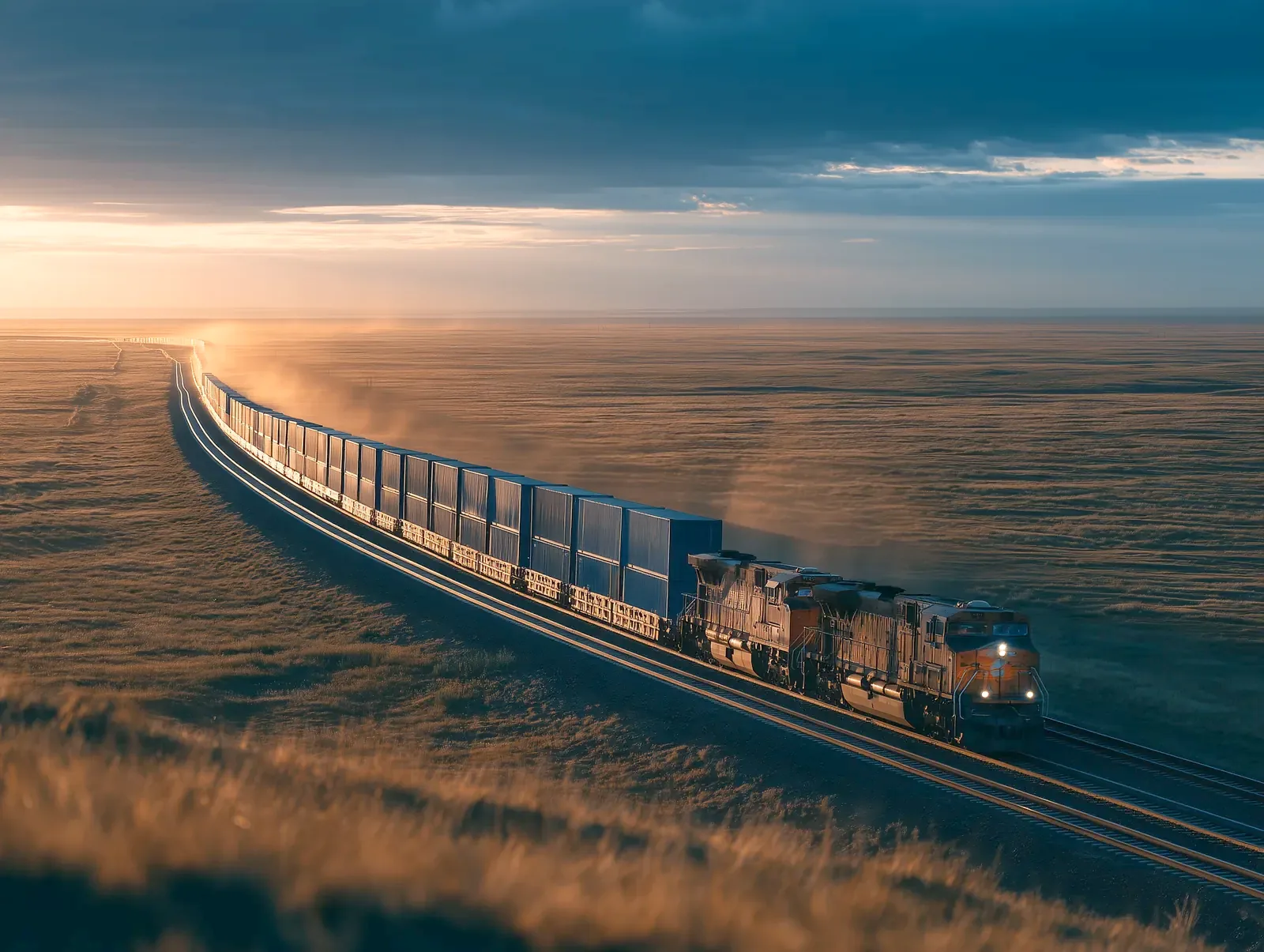
Freight from Lithuania to Uzbekistan — key facts
| Departures | 3–6 trucks a week from Vilnius to Uzbekistan and Kazakhstan; groupage consolidated weekly |
| Vilnius → Tashkent | groupage 11–15 days · full truck 9–13 · rail 15–22 · air 1–3 |
| Vilnius → Samarkand / Fergana | groupage 12–17 days · full truck 10–15 · rail 17–24 · air 2–4 |
| Minimum shipment | 1 kg or 0.1 m³ — a pallet leaves without waiting for a full truck |
| Documents on the EU side | EX-A, T1, CMR, packing list; certificate of origin, veterinary or phytosanitary certificate on request — prepared in Lithuania |
| Route | every HS code is checked against EU sanctions before loading: via Kazakhstan, or via Türkiye and the Caspian for restricted goods — free HS check |
| Reply and quote | we reply within one business day (Mon–Fri 08:00–17:00); fixed quote within 24 hours of receiving the packing list and HS codes |
Part loads (LTL) and full loads to Tashkent through consolidation in Vilnius, rail freight from Lithuania, Latvia and Poland to Uzbekistan and back, plus air (avia) freight.
Full loads (FTL) · part loads (LTL) · road · rail · air (avia) · multimodal — both ways on every route below.
Featured rail route — to & from Uzbekistan
Lithuania (Vilnius), Latvia (Riga), Poland (Warsaw)
Baltic gateway
Lithuania (Vilnius)
Uzbekistan ⇄ Europe and the UK
Germany (Hamburg), France (Paris), Spain (Madrid), Italy (Milan), Netherlands (Rotterdam), Belgium (Antwerp), Poland (Warsaw), Latvia (Riga), Czechia (Prague), Sweden (Stockholm), Denmark (Copenhagen), Finland (Helsinki), Norway (Oslo), United Kingdom (London)
What we handle to and from Uzbekistan
- Partial loads & groupage (LTL) — our core lanes: Uzbekistan and Kazakhstan
- Road freight — full truck loads (FTL)
- Rail freight — rail freight from Lithuania, Latvia, Poland to Uzbekistan, Kazakhstan and the wider region and back
- Air freight (avia) — for time-critical cargo
- Sea & multimodal combined routes
- Customs clearance, documents & T1 transit
- Warehousing, consolidation & distribution
- Project, oversized & dangerous goods (ADR)
How cargo reaches Uzbekistan
Uzbekistan is our busiest lane: trucks leave Vilnius for Tashkent every week, and the Kazakh–Uzbek border is one we cross more often than any other.
From Vilnius through Latvia or via Belarus and Russia — depending on what the goods are allowed to transit — across Kazakhstan to the Zhibek Zholy / Gisht Kuprik crossing near Tashkent, then on to Samarkand, Bukhara, Fergana, Andijan, Navoi or Nukus. Full 13.6 m trucks, 24 t / 90–120 m³.
Our core product. Regular weekly consolidations from Vilnius to Tashkent, with onward distribution to every region. From 1 kg or 0.1 m³ — a pallet leaves without waiting for a full truck and you pay only for the space you use.
Container and wagon shipments from Lithuanian and Polish terminals to Tashkent, Chukursay or Sergeli via Kazakhstan. Best for heavy, regular volumes: equipment, steel, chemicals, building materials.
Vilnius / Riga / Warsaw → Tashkent, direct or via Istanbul, 1–3 days door to door.
For goods barred from Belarus and Russia: Turkey → Georgia → Baku → Turkmenbashi or Aktau → Uzbekistan. Longer, but sanction-safe.
Transit times
| Mode | Vilnius → Tashkent | Vilnius → Samarkand / Fergana |
|---|---|---|
| Road FTL | 9–13 days | 10–15 days |
| Groupage LTL | 11–15 days | 12–17 days |
| Rail | 15–22 days | 17–24 days |
| Air | 1–3 days | 2–4 days |
Uzbekistan is not in the EAEU, so the cargo is cleared twice on land: transit through the EAEU (Kazakhstan) and import at the Uzbek border or the destination customs post. A consignee whose contract, import permits and certificates are ready before the truck arrives saves 2–4 days at Tashkent.
Documents for Uzbekistan
EU side: EX-A export declaration, T1 transit, CMR, packing list, EUR.1 or certificate of origin from the Vilnius Chamber of Commerce on request. Uzbek side: the importer's contract registered in the customs system, invoice, and for regulated goods a conformity certificate (Uzstandart) — food, cosmetics, electrical equipment, toys and building materials most often.
Veterinary and phytosanitary certificates for animal and plant products are issued in Lithuania before departure — our HS code check tells you whether your code needs one. Dual-use and sanctioned goods are screened before we accept the booking.
Pricing: what a quote includes
Groupage is priced per pallet or per cubic metre, full trucks per vehicle. Included: EU export formalities, T1, transit through Kazakhstan. Not included: Uzbek import duties and VAT, certification fees, demurrage if the consignee's paperwork is late. Fixed quote within 24 hours of receiving the packing list and HS codes.
Why INFOBETA on the Uzbekistan lane
Since 2008 Uzbekistan has been the lane we built the company around. Every week 3–6 trucks leave Vilnius for Uzbekistan and Kazakhstan, with our own consolidation and paperwork at warehouses in Vilnius. One coordinator from booking to delivery, in Lithuanian, English or Russian.
Sending cargo from Lithuania: what you need to know
You bring the cargo to the warehouse in Vilnius; the exact address is sent once the order is confirmed. If you need collection from your address, give it in the enquiry and we will tell you whether we can arrange it.
INFOBETA lodges the EX-A export declaration in Lithuania. When the goods leave the EU, the IE599 exit confirmation is issued — exporters keep it as evidence for invoicing the export with 0% VAT. EX-A and IE599 step by step.
Certificate of origin from the Vilnius Chamber of Commerce; veterinary and phytosanitary certificates are issued in Lithuania before departure (INFOBETA is in the Lithuanian Phytosanitary Register, No. 008763).
Packing list (weight, dimensions, number of pallets), HS codes, the loading address in Lithuania and the delivery address. You receive a fixed quote within 24 hours.
Uzbekistan freight — common questions
Which cities in Uzbekistan do you deliver to?
We deliver across Uzbekistan — including Tashkent, Samarkand, Bukhara, Karshi, Navoi, Andijan, Fergana, Namangan, Nukus — and to other cities on request, both import and export.
Can goods to Uzbekistan transit through Belarus and Russia?
Most can, some cannot: EU regulations 765/2006 and 833/2014 prohibit transit of listed goods. Enter the HS code in our free checker — it shows whether the Belarus route is open or the cargo must go via the Caspian.
What is the minimum shipment for groupage to Uzbekistan?
From 1 kg or 0.1 m³. Small consignments are consolidated in Vilnius and travel on the weekly Tashkent truck.
Where is import clearance for Uzbekistan done?
At the Uzbek border or the destination customs post — Uzbekistan is not in the EAEU. We prepare the export side in Vilnius and coordinate with the consignee's broker in Tashkent so both sides are ready on the same day.
How long does cargo take from Lithuania to Tashkent?
From Vilnius: groupage 11–15 days, full truck 9–13 days, rail 15–22 days, air 1–3 days door to door. Samarkand and Fergana take 1–2 days longer.
Where do I deliver the cargo in Lithuania?
To the warehouse in Vilnius — the exact address is sent once the order is confirmed. We do not collect in every Lithuanian city; if you need collection, give the address in the enquiry and we will tell you whether it can be arranged.
See also
Groupage Europe → Uzbekistan · Groupage Europe → Kazakhstan · From Germany to Uzbekistan · From Italy to Uzbekistan · Freight Kazakhstan · Free HS code check · From Poland · From Latvia · From Belgium · From France · From Spain · From the Netherlands · From Czechia · From Austria · From Sweden · From Denmark · From Finland · All freight routes
Worth reading
Cost of shipping cargo to Tashkent · CMR or TIR to Uzbekistan: the difference · T1 vs EX-A: which document you need