The Caspian route step by step: from Vilnius to Tashkent bypassing Belarus and Russia
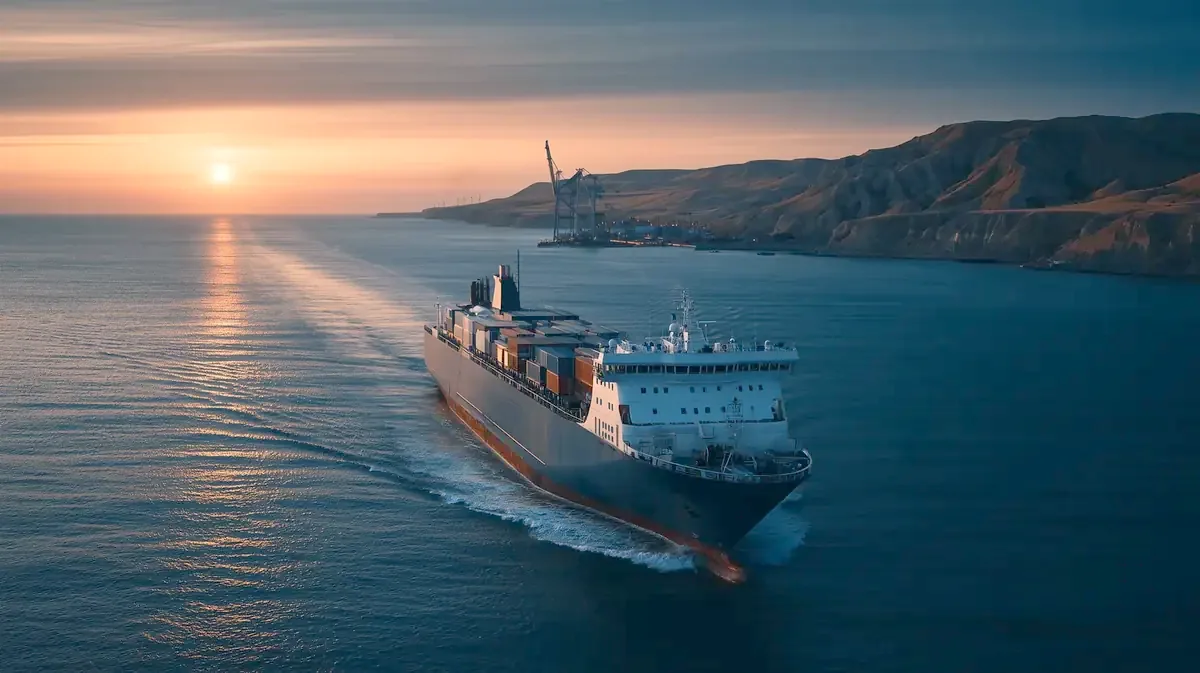
The Caspian route, also called the Middle Corridor or the Trans-Caspian International Transport Route, is the only overland way from the EU to Central Asia that completely bypasses Belarus and Russia. Before 2022 it was rarely used; today it is the everyday alternative for goods whose HS codes fall under the transit bans of EU Regulations 765/2006 and 833/2014. Here is what it looks like from the truck cab.
Stage 1. Lithuania – Turkey (4–6 days)
From our warehouse near Vilnius the truck drives through Poland, Slovakia or Czechia, Hungary, Romania and Bulgaria to the Turkish border at Kapıkule. Throughout the EU part the cargo travels under EX-A, and the EU export is closed at the Bulgarian–Turkish border. Kapıkule is one of Europe's busiest border crossings – the queue can take from a few hours to a day, so we time the departure so that the truck does not reach the border at the weekend.
Stage 2. Turkey – Georgia (2–3 days)
Through Turkey the cargo moves in transit – under a TIR carnet or a Turkish transit declaration – to the Sarp crossing on the Black Sea. Georgian customs works fast, and transit through the country takes about a day. The road across the Caucasus is mountainous, with possible temporary closures in winter, which we build into the lead time.
Stage 3. Azerbaijan and the port of Baku (3–7 days)
The Georgia–Azerbaijan border is crossed at Red Bridge, then on to Baku. Trucks or trailers are ferried from the port of Alat near Baku. This is the route's biggest uncertainty: the ferries have no fixed timetable, they sail when full, and waiting in port takes from a couple of days to a week. It is this leg that usually decides whether the journey takes 18 or 28 days.
Stage 4. Ferry across the Caspian (1–2 days)
The crossing from Alat to the port of Kuryk or Aktau in Kazakhstan takes about a day; to Turkmenbashi in Turkmenistan about the same. For Uzbekistan the sailing is usually via Kazakhstan, because the road then runs through Beyneu and the Kazakh–Uzbek border with no additional transit through Turkmenistan. For cargo to Turkmenistan it is the reverse – straight to Turkmenbashi.
Stage 5. Kazakhstan – Uzbekistan (3–5 days)
From Aktau via Beyneu to the Uzbek border and on to Tashkent – about 2,500 km of steppe. In Kazakhstan transit is formalised under EAEU rules; at the Uzbek border the consignee's customs broker files the import declaration. Unloading in Tashkent, Samarkand or Fergana – as per the CMR.
Documents
CMR, commercial invoice, packing list and EX-A – as for any export. The difference is the transits: a TIR carnet is the most convenient, as it is valid in Turkey, Georgia, Azerbaijan and Kazakhstan. Without it a separate transit declaration with a guarantee is opened in each country. The ferry ticket and port formalities in Azerbaijan go through a local agent we work with permanently. Certificates (origin, phytosanitary, veterinary) are prepared in Lithuania before departure, just as for the northern route.
Price and when it pays off
The Caspian route is more expensive than the way through Belarus because of distance (about 6,500 km instead of 4,500), the ferry, port charges and several transits. We give the exact difference on request, as it depends on cargo volume and season. It pays off when there is no other way: the goods' code is closed for transit through Belarus and Russia, and air freight is too expensive because of the weight. Whether this applies to your goods is shown by the HS code check – next to every code we state whether the route runs via Belarus, via Latvia, or only via Turkey and by air.
How to shorten the lead time
Three things that really work: depart so that the truck reaches Kapıkule and the port of Alat on working days; hold a TIR carnet rather than a set of separate transits; and consolidate the cargo to a full truck, because ferry space is sold per vehicle, not per pallet. For groupage cargo we suggest waiting for the next full departure in the Caspian direction – it is cheaper than sending a half-empty trailer.
Related: three routes to Central Asia · Destinations: Uzbekistan, Turkmenistan, Kazakhstan