Sea freight
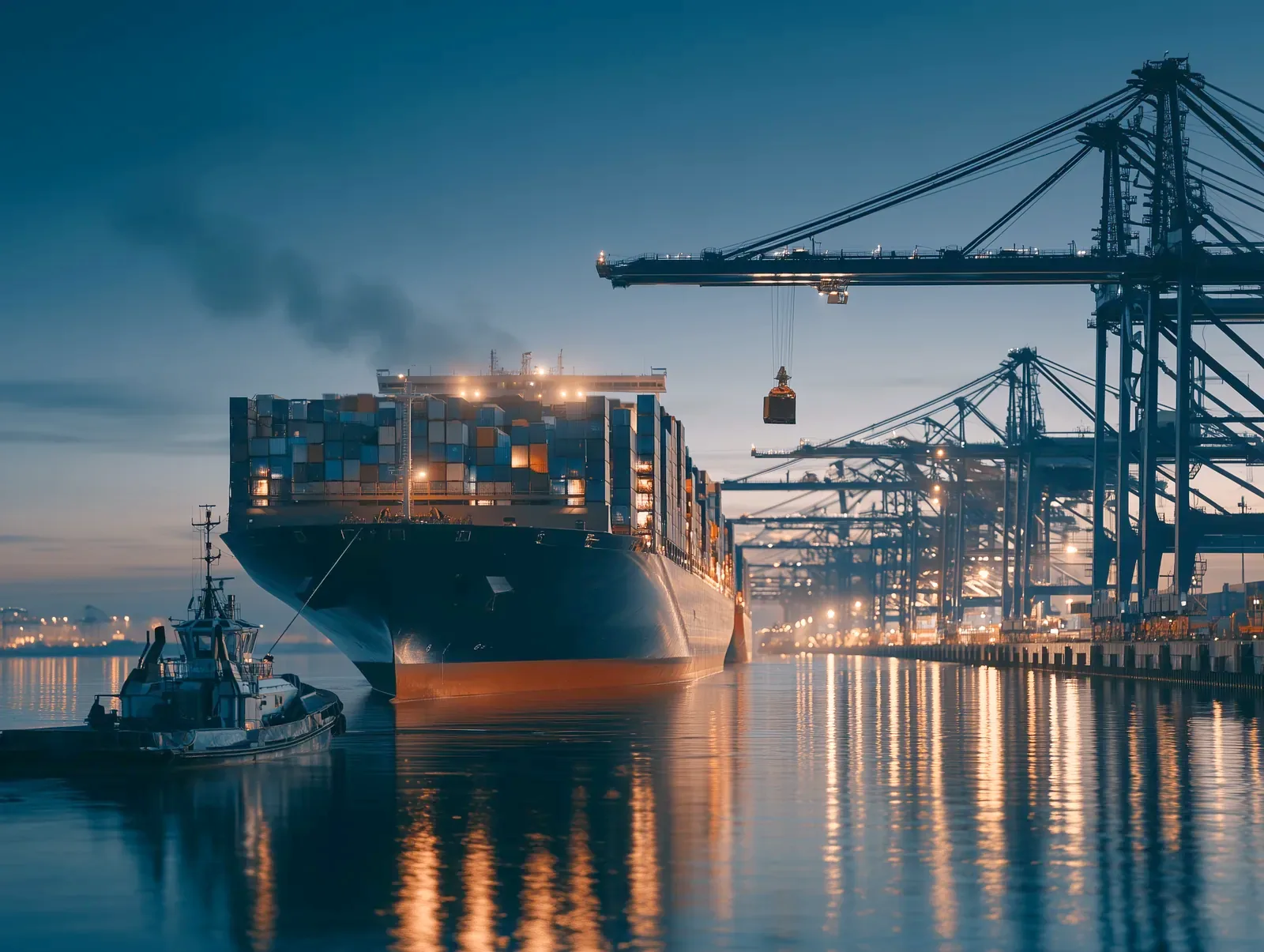
No limits on volume or weight and worldwide reach — that is sea freight. We work with ports across the world and receive cargo at Klaipėda and Riga.
Overview
We work with ports worldwide and receive cargo at Klaipėda and Riga. We plan the whole route — from port to door — together, so you have one clear route.
Price: on request
Cargo size: full containers (FCL) and less-than-container sea cargo (LCL)
Transit time: e.g. from New York or Vietnam — 35–45 days (depending on port and route)
Additional services: cargo intake at Klaipėda and Riga ports; oversized and heavy cargo; customs clearance with experienced customs brokers
Key advantage: the lowest cost per ton over long distances and capacity with no practical size or weight limits
When sea freight is the cheapest route
Sea freight has no practical size or weight limits and gives the lowest cost per tonne over long distances. The trade-off is time — which makes it right for planned rather than urgent cargo.
Where from and how long
We work with ports worldwide. From New York or Vietnam, for example, cargo travels 35–45 days, depending on the port and the routing. That lead time is planned in advance and is predictable.
Full or shared container
We ship full containers (FCL) and less-than-container loads (LCL). LCL pays off when the goods do not fill a container; FCL when the container is full or when you want to avoid consolidation in warehouses.
Receiving in Klaipėda and Riga
We receive cargo in the ports of Klaipėda and Riga. From the port we continue with our own transport or by rail, so you deal with one partner and one set of documents instead of separate arrangements for each leg.
When sea loses
If the deadline is under a month, sea usually does not fit — then we look at rail, road or air. The honest answer depends on what costs you more: time or freight.
Out-of-gauge and heavy cargo
Sea is the natural solution for oversized and bulky cargo that road transport will not take. Customs formalities are handled with experienced customs brokers.
How a sea shipment to Central Asia works
Central Asia has no sea, so a sea route always ends overland: the container sails from Klaipėda, Rotterdam or Gdańsk to Poti / Batumi (Georgia) or to Turkish ports, then across the Caspian to Turkmenbashi or Aktau and on by truck or rail to the consignee. The second option is the Baltic ports and onwards by rail through Kazakhstan.
Sea pays off when the cargo is heavy, out-of-gauge or not urgent: equipment, building materials, chemicals, metal. FCL is a full 20 or 40 ft container; LCL is part of a container when the volume is below ~15 m³. If the volume allows a choice, the quote always shows both. We give the door-to-door lead time in the quote — it depends on the port and the routing; customs formalities are handled in the country of departure and destination.